
Florida has the most aggressive tax-collection calendar in the country. The window is shorter than most owners realise.
If you have fallen behind on property taxes on a Florida vacant lot, the situation is not catastrophic, but it is on a clock — and the clock is set by Florida Statutes Chapter 197. This guide walks through the exact Florida tax-collection timeline in plain English: when taxes become delinquent, when the county sells a tax certificate on your lot, how long you have before the certificate holder can file a tax deed application, what happens at the tax deed sale, and why selling the lot to a direct cash buyer before the tax deed application is filed almost always nets you more than letting the process run to its conclusion.
The honest tone matters here. The reader is a Florida landowner who has been carrying a property tax burden they cannot — or no longer want to — sustain. The content does not moralise about the missed payments. It explains the legal framework, names the specific statutes, identifies the window for action, and offers a concrete procedural alternative. Lower-temperature copy is what converts the seller in this situation.
The Florida Tax Collection Timeline — Step by Step Under Chapter 197
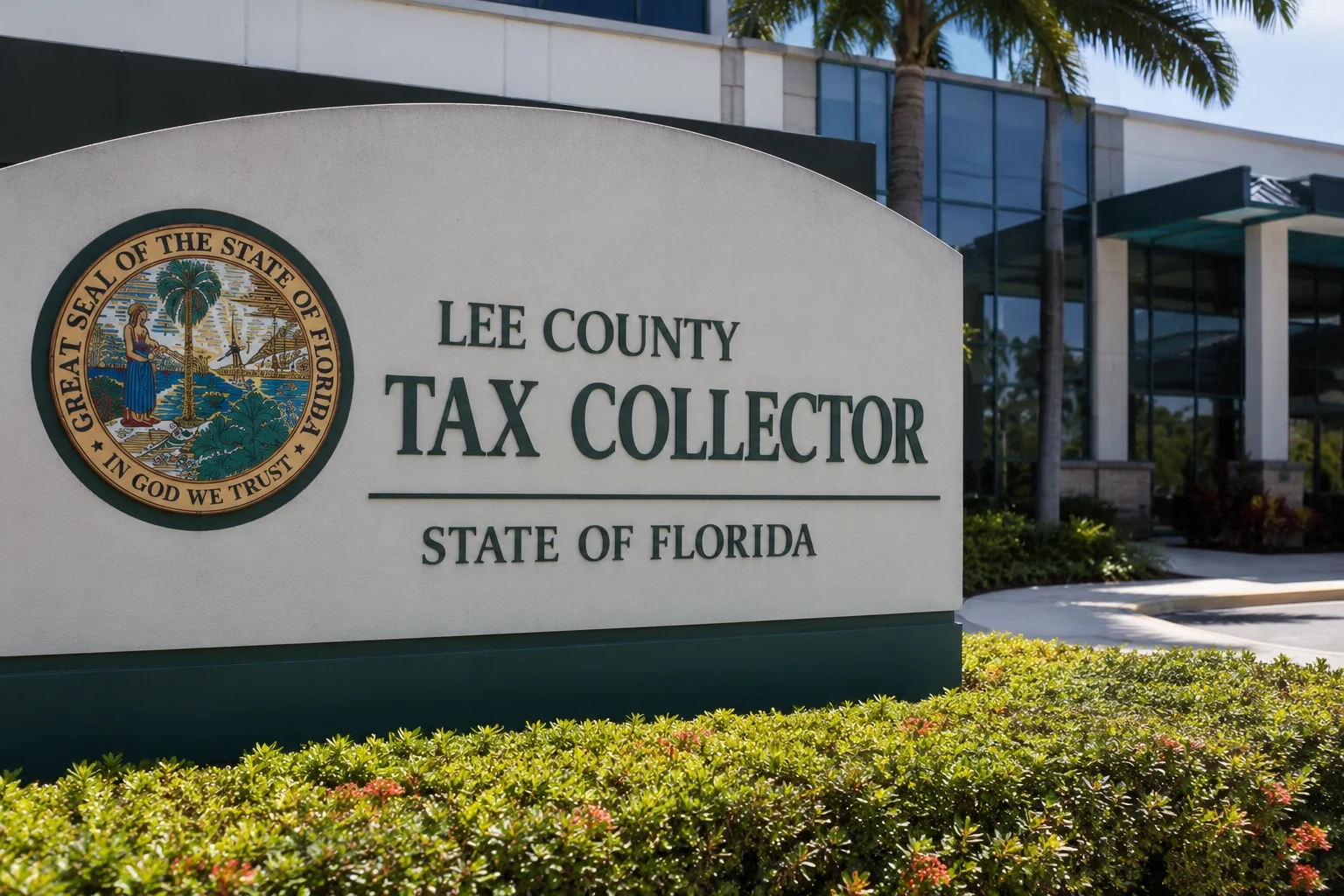
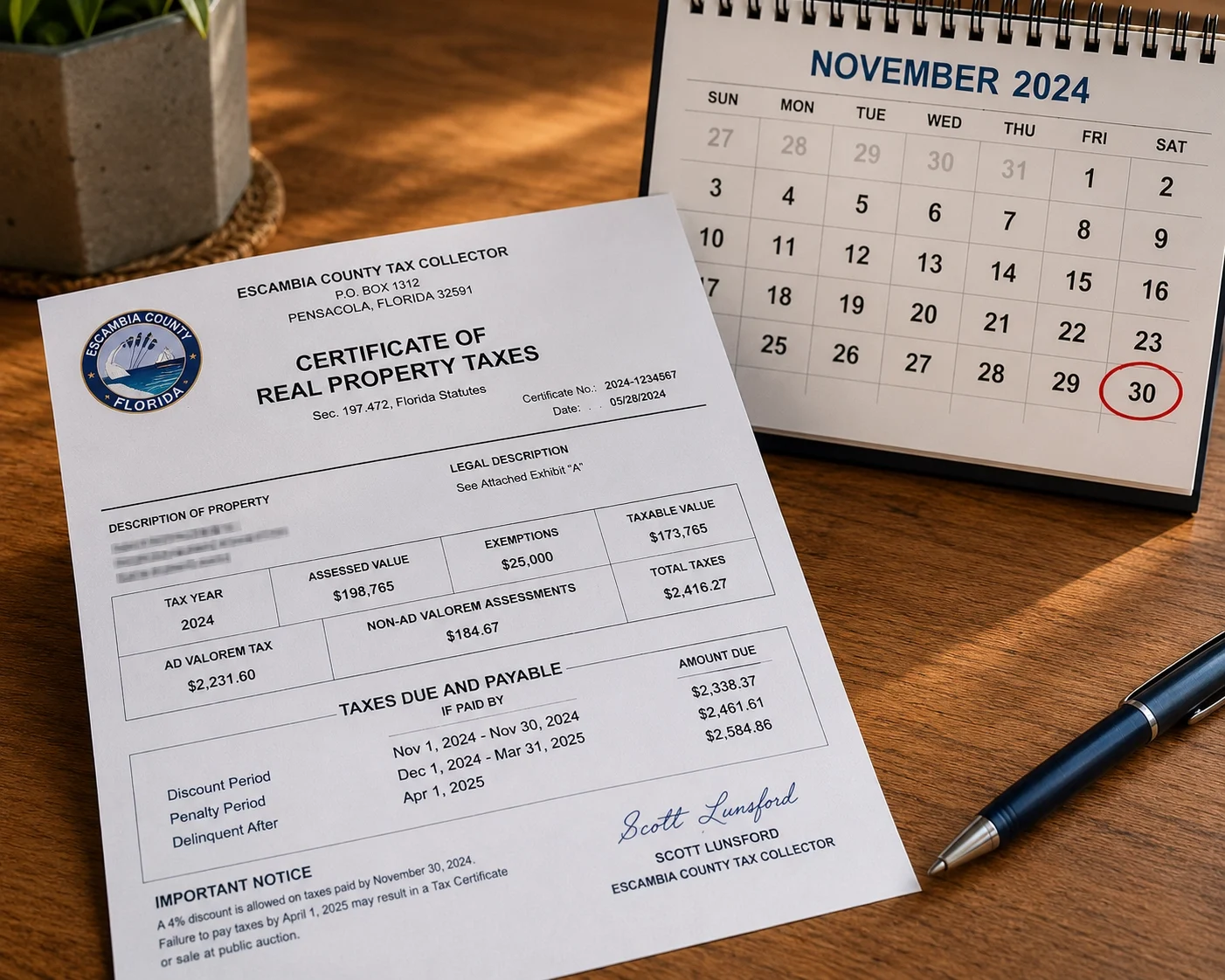
Florida property taxes are billed annually, with payment due by March 31 of the following year. Discount payments are available for early payers (4 percent off if paid in November, 3 percent in December, 2 percent in January, 1 percent in February). On April 1, any unpaid Florida property tax becomes delinquent under Florida Statutes Chapter 197. The Florida tax-collection sequence then follows a defined four-step calendar that runs across multiple years.
Step one — May or June of the year following delinquency. The county sells a tax certificate on the delinquent property at the annual tax certificate sale. A third-party investor (or, in some cases, the county itself) pays the county the back tax plus interest in exchange for the right to collect that debt from the owner.
The tax certificate is a lien on the property, not a transfer of ownership. The owner still owns the lot and can redeem the certificate at any time by paying the back tax plus accrued interest plus the redemption premium.
Step two — the two-year minimum waiting period. Under Florida Statutes § 197.502, the tax certificate holder must wait at least two years after April 1 of the year the certificate was issued before they can apply for a tax deed. During this window, the owner can still redeem the certificate. Many owners do redeem during this window — sometimes from refinancing, sometimes from selling the property to a cash buyer who pays off the back taxes at closing as part of the transaction.
Step three — the tax deed application. After the two-year minimum has passed (and before the seven-year maximum under § 197.482), the certificate holder pays the application fee to the county and files a tax deed application. The county clerk then schedules the tax deed sale and provides notice to the owner under § 197.522 at least twenty days before the sale date. This notice is sent by certified mail to the legal titleholder of record. If you have moved without updating your mailing address with the Florida county tax collector, you may not receive this notice — but the sale still proceeds.
Step four — the tax deed sale itself. Under § 197.542, the tax deed sale is conducted by the county clerk, typically as an online public auction. The opening bid covers the back taxes, interest, fees, and tax deed application costs. The lot sells to the highest bidder. If no one bids the opening bid amount, the lot is added to a county “lands available for taxes” list — where after three years it escheats to the county. If the sale price exceeds the opening bid, the excess proceeds may be claimed by the prior owner under § 197.582. But the prior owner has lost the lot and now has only a procedural claim for whatever surplus exists above the back-tax debt.
Real Experiences From Land Sellers Across Texas

Jay Shultz

“Selling land is a different beast than selling a house. It was so refreshing to find out that Bob at Sell Land was super knowledgeable and had me covered in every way. He understands the nuances of buying land and also my unique needs. He is great to work with and if you have land you want to sell, Sell Land is the company and Bob is the man“

David M.
“Bob is a young man with a vision and aptitude for recognizing opportunities. He implements a plan and creates a winning situation for his clients. Bob continues to touch people’s lives based on their objectives with real estate. If you are entering the market as a seller, I could not recommend anyone more qualified or dedicated than Bob Scott.”
Why the Window Before the Tax Deed Application Matters Most
The single most important point in this timeline is the two-year window between when a tax certificate is issued and when the certificate holder can file a tax deed application. During that window, the owner has full ownership rights and can sell the lot to anyone, including a cash buyer who pays off the back taxes at closing as part of the transaction. After the tax deed application is filed and the sale is scheduled, options narrow significantly. After the tax deed sale, the lot is gone.
Owners who sell during the two-year window typically net substantially more than the eventual tax deed auction would have produced. The reason is straightforward — a tax deed sale produces an opening bid that covers only the back taxes and fees.
The lot might sell at the auction for a modest amount above that opening bid, but the auction-format pricing on a vacant Florida lot routinely produces 30 to 60 percent of fair market value because the auction buyer takes the property without inspection, without title insurance, and with the redemption-risk overhang. A direct cash sale during the two-year window prices the lot at its actual fair-market value minus the back-tax liability and the buyer’s standard cash-purchase discount — almost always a better economic outcome for the seller than the tax deed sale.
How a Cash Sale Handles the Back-Tax Issue at Closing
When Sell Land buys a Florida lot with back property taxes owed, the back taxes are paid off at closing through the Florida title company as part of the standard closing process. The cash offer accounts for the back-tax liability — the offer amount minus the back-tax payoff equals what wires to the seller’s account at closing. No separate seller payment to the tax collector is required. The title company handles the entire tax-payoff coordination. The result is a clean title transfer recorded with the county clerk under Florida Statutes Chapter 689, with the back-tax debt extinguished as part of the closing.
For tax certificates that have already been sold to a third-party certificate holder, Sell Land has the experience to coordinate the certificate redemption directly with the holder at closing — paying off the certificate plus accrued interest plus the statutory redemption premium. The certificate holder cancels the certificate at closing, the title clears, and the lot transfers with no further tax-collection exposure. This is routine work for Sell Land’s twenty years of Florida vacant-lot experience.
Why a Cash Sale Is Specifically Well-Suited to a Behind-on-Taxes Florida Lot
A traditional Florida vacant-land listing on a parcel with back property taxes is structurally difficult. The title commitment will surface the back-tax lien as a title exception. The buyer’s lender (if the buyer is financing) will require the lien cured before closing — which usually means the seller paying the back tax out of pocket before the sale can proceed. The seller who is behind on tax often does not have the cash to pay the back tax out of pocket. The result is a listing that drags or falls through, with the tax deed clock continuing to run in the background.
A direct cash sale to Sell Land bypasses every part of that problem. We buy with our own funds — no buyer-side financing contingency. We coordinate the back-tax payoff at closing through the title company. We close in two to four weeks from offer acceptance, well within the two-year window before the tax deed application becomes available. The number on the written offer (minus the back-tax payoff) is the number that funds to your account at closing. Same-day cash deposit at offer acceptance. Direct buyer, not wholesaler.
Get a Written Offer Before the Tax Deed Application Window Opens
If a tax certificate has been issued on your Florida lot, you have a defined window before the certificate holder can file a tax deed application under Florida Statutes § 197.502. A written cash offer this week — with the back-tax payoff coordinated at closing — converts an uncertain situation into a definite dollar amount. Direct buyer. Twenty years. Same-day deposit at acceptance.
Contact Us Now And Get Your Free, Fair All-Cash Offer Today.