
Your grandfather bought a lot in Cape Coral in 1965 for $20 down. You still own it. It is one of 2.1 million.
That sentence captures the entire pre-1970 Florida land-development story. Between 1957 and 1969, a handful of Florida companies platted and sold more vacant subdivision lots than every other state in the country combined. The Rosen brothers founded Gulf American Land Corporation in 1957 and built Cape Coral on the Caloosahatchee River across from Fort Myers. The same company expanded into Lehigh Acres in 1959, then Golden Gate Estates east of Naples, and ultimately platted over 600,000 lots before being acquired in 1969. The Mackle brothers formed Deltona Corporation in 1962 and developed Deltona, Marco Island, and a dozen other communities. General Development Corporation built Port Charlotte, North Port, Port St. Lucie, and Port Malabar. Lehigh Corporation built Lehigh Acres into a 60,000-acre, 135,000-lot subdivision east of Fort Myers. The strategy was identical across all of them: buy enormous tracts of central or coastal Florida wilderness, plat them into quarter-acre and half-acre lots, lay paved roads on a grid, and sell the lots sight-unseen on installment plans to buyers in New York, Ohio, Pennsylvania, New Jersey, and the rest of the northeast and midwest. The buyers were typically retiring (or pre-retiring) families looking at Florida as a future retirement destination.
Six decades later, most of those original lots are still vacant. Lee County alone — home to Cape Coral and Lehigh Acres — has over 337,000 platted lots, 232,000 of which remain vacant. Charlotte County (Port Charlotte) has 118,250 platted lots, 88,500 still vacant. North Port (Sarasota County), Palm Coast (Flagler County), Citrus Springs (Citrus County), Deltona (Volusia County), and Marco Island (Collier County) all carry similarly enormous vacant inventories. If you inherited a Florida lot from a parent or grandparent who bought it during the 1957-1969 boom and never built on it, you are not alone — you are one of roughly two million current Florida subdivision-lot holders facing the same set of decisions.
How These Lots Got Sold in the First Place
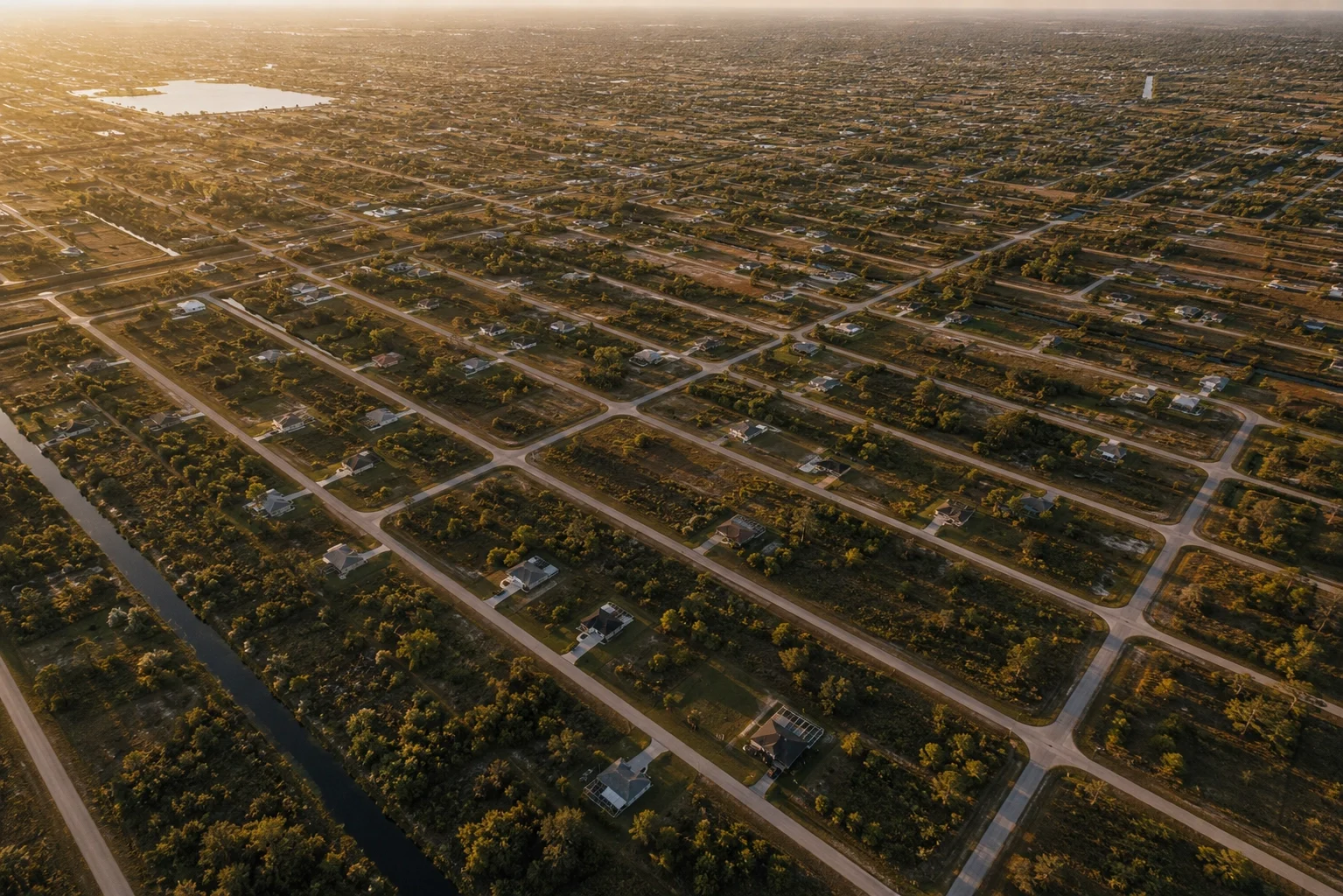
in 1957, built Cape Coral and Lehigh Acres and sold over 600,000 lots
before dissolution in 1969 — most still vacant today.
The 1957-1969 Florida land-sales boom worked because of a perfect alignment of three forces. First, post-war prosperity meant millions of American families had disposable income for the first time and were thinking about retirement decades in advance. Second, air conditioning became mortgage-eligible in the late 1950s, which suddenly made year-round Florida living attractive to people from cooler climates. Third, the land developers — Gulf American Land Corp, Deltona Corp, General Development Corp, Lehigh Corporation, Arvida Development — built sophisticated direct-mail and in-person sales operations that targeted buyers in the northeast, midwest, and increasingly overseas (particularly Germany for Cape Coral). The sales pitch was simple: own a piece of Florida sunshine before retirement, on an installment plan you can afford ($10 to $20 a month was common), with the implicit understanding that the lot would appreciate dramatically as Florida grew.
The lots did appreciate — modestly — but the appreciation never matched the sales-pitch promises. Most lots were sold in subdivisions that were never connected to municipal water, sewer, or electrical infrastructure. Many were in wetland or flood-prone areas that would not pass modern environmental review. Many had no road frontage or no legal access. Most original buyers either built on the lot (a small percentage), sold the lot to another buyer within a few years (sometimes profitably, sometimes at a loss), or simply held the lot. The holders’ children and grandchildren now own those parcels — and many have not visited them in years or ever.
Real Experiences From Land Sellers Across United States

Jay Shultz

“Selling land is a different beast than selling a house. It was so refreshing to find out that Bob at Sell Land was super knowledgeable and had me covered in every way. He understands the nuances of buying land and also my unique needs. He is great to work with and if you have land you want to sell, Sell Land is the company and Bob is the man“

David M.
“Bob is a young man with a vision and aptitude for recognizing opportunities. He implements a plan and creates a winning situation for his clients. Bob continues to touch people’s lives based on their objectives with real estate. If you are entering the market as a seller, I could not recommend anyone more qualified or dedicated than Bob Scott.”
What These Lots Are Actually Worth in 2026
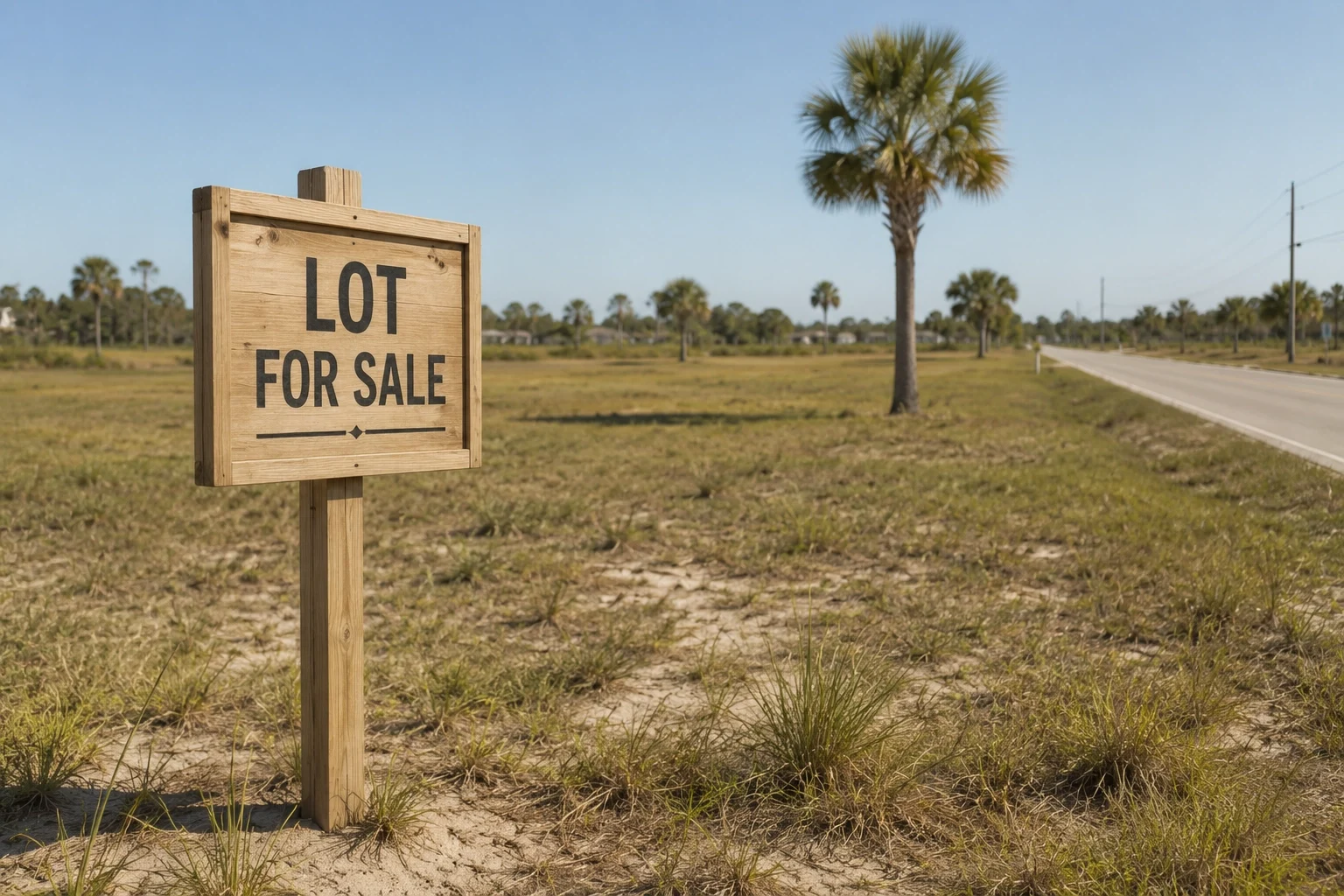
wetland regulations existed. The Florida Department of Environmental
Protection now classifies many parcels as wetland —
restricting building but not eliminating sale potential.
The honest answer about Florida subdivision-lot value in 2026 is that it varies enormously by location, by specific subdivision, and by buildability characteristics. A standard quarter-acre lot in northwest Cape Coral that has water and sewer access, decent road frontage, and no wetland concerns might sell for $18,000 to $35,000 to a builder or end user. The same-sized lot two miles away in southwest Cape Coral with no utility connection, partial wetland classification, and shared access might sell for $5,000 to $12,000. A Lehigh Acres lot in the older platted core with utilities might sell for $14,000 to $22,000. A Lehigh Acres lot on the eastern edge without utilities might sell for $4,000 to $9,000. Port Charlotte and North Port lots span a similar range. Lots in Citrus Springs, Palm Coast, or Marion Oaks typically sit at the lower end of the range.
The factors that drive subdivision-lot value most heavily are (1) whether the lot has paved road frontage, (2) whether utilities are available at the lot line or nearby, (3) whether the lot is buildable under current floodplain and wetland rules, (4) the specific location within the broader subdivision, and (5) how recently neighbouring lots have sold and at what price. Sell Land’s twenty years of Florida vacant-lot transactions means we have closed on lots across every Florida subdivision pattern — and we price each offer based on the actual lot’s characteristics, not a one-size-fits-all formula.
The Florida Subdivision-Lot Title Situation — What You Should Know
Most 1957-1969 Florida subdivision lots have clean title today because the original land development companies (Gulf American, Deltona, General Development) used standardised installment-sale contracts that resulted in clean deeds once the installment plan was completed and the deed was recorded with the county clerk. However, a meaningful minority of original-owner lots have title questions: original installment contracts where the deed was never properly recorded, second-generation transfers where probate was incomplete, or chain-of-title gaps where a parcel passed through multiple owners without a formal title search.
Under Florida Statutes Chapter 689, the requirements for a valid conveyance of Florida real estate are straightforward — a written deed signed by the seller, witnessed by two witnesses, and notarised. Most subdivision-lot conveyances satisfy these requirements. But the title insurance underwriters that a traditional listing’s buyer will engage may find historical title defects that the seller did not know about — and curing those defects can take months and cost meaningful money. Sell Land does its own title diligence as a routine part of the closing process. We absorb the title work into the offer price and close on lots with title questions that traditional listings frequently cannot.
Wetlands, Buildability, and the Honest Lot-by-Lot Reality
Many 1957-1969 Florida subdivision lots were platted before modern wetland and floodplain regulations existed. The Florida Department of Environmental Protection now classifies many parcels in these older subdivisions as wetland or partial-wetland — which restricts (sometimes prohibits) new residential construction on those specific lots. Cape Coral, Lehigh Acres, Port Charlotte, North Port, Golden Gate Estates, and Citrus Springs all contain meaningful percentages of lots that are not buildable under current regulations. The owner of such a lot does not lose ownership — but the lot’s value reflects the limited use.
If you have been told by a neighbour, a real estate agent, or a county zoning officer that your lot may be wetland-affected or non-buildable, that does not eliminate the lot’s sale potential. Florida cash buyers — including Sell Land — routinely buy non-buildable wetland lots at appropriate pricing, often for land-banking, conservation buyer resale, or specific use cases that do not require building. We make the offer based on actual lot characteristics, including wetland status, and we tell you honestly what the lot is worth in its current condition. There is no inspection-contingency renegotiation later.
Why a Cash Sale Is Specifically Well-Suited to Florida Subdivision Lots
Vacant Florida subdivision lots are exactly the inventory that traditional real estate listings struggle with most. Comparables are scarce within any specific lot’s micro-area. The end buyer pool is small (a few specific builders, a smaller number of speculator-investors, the occasional individual building a retirement home). Listing agents charge 8 to 10 percent commission and typically need 9 to 24 months to find a buyer. The carrying-cost meter on the property tax and the canal or special-district assessments continues to run throughout.
A direct cash sale to Sell Land closes in two to four weeks from offer acceptance. Sell Land closes with our own funds — no end-buyer search, no wholesaler assignment, no financing contingency. We have closed on lots in every major Florida subdivision community (Cape Coral, Lehigh Acres, Port Charlotte, North Port, Palm Coast, Citrus Springs, Deltona, Marco Island, Golden Gate Estates, Marion Oaks, Indian Lake Estates, Sebastian Highlands) and we have closed on lots with title questions, with wetland classifications, with missing surveys, with original Gulf American installment paperwork still in the family file. Twenty years of experience means most variations have a known answer.
Get a Written Offer to the Estate This Week
Whether your lot has been in the family for sixty years or you acquired it last decade, a written cash offer this week is information. Once you can see the actual number, you can decide whether the cash sale path makes sense versus continuing to hold the lot (and pay the annual tax bill) or listing through a traditional agent. Same-day cash deposit when you accept the offer. Direct buyer — not a wholesaler. Twenty years of Florida subdivision-lot transactions.