
You own Arizona acreage you have not visited in years. The annual tax bill keeps arriving.
Maybe it is two and a half acres of Mohave County desert outside Dolan Springs that your father bought in 1976 on a $5,400 contract he never finished paying attention to. Maybe it is five acres of Cochise County land outside Pearce you bought in 2007 expecting a retirement build that did not happen. Maybe it is ten acres your uncle deeded to you in 2014 in the Sulphur Springs Valley that you have never personally walked. Whatever it is, the parcel is somewhere remote, the annual property tax bill arrives at your out-of-state address, and the asset has produced exactly zero income for as long as you have owned it.
This guide is for you. It explains what the Arizona vacant-land market actually looks like in 2026, why Arizona has the shortest adverse possession statute in the country (and what that means for absentee owners), what the practical cost of listing remote Arizona acreage through a real estate agent actually amounts to, and what working with Sell Land — Bob and Carly Scott, in business twenty years, buying vacant land in all fifteen Arizona counties — actually looks like from the seller’s side of the table.
What the Arizona Vacant Land Market Actually Looks Like in 2026
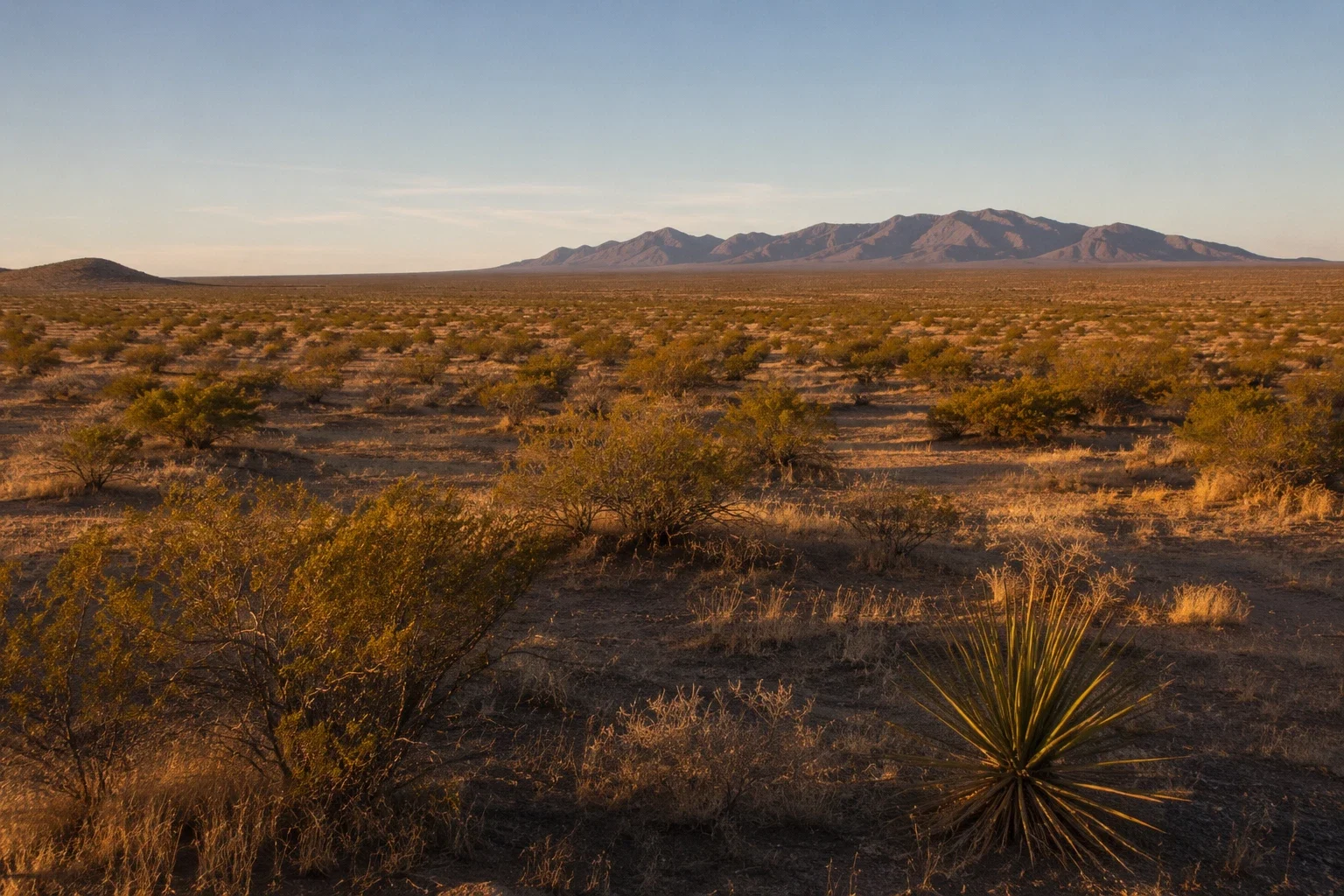
Arizona is the third-largest vacant-land seller market in the United States by total search volume — behind only Texas and Florida, both of which Sell Land has now published Psycho-Writing™ Campaigns for. The Arizona inventory is structurally different from those two states. Where Texas is dominated by working rural acreage (cattle, timber, hunting) and Florida is dominated by 1960s-era subdivision lots in master-planned communities, Arizona’s vacant-land inventory is dominated by remote desert acreage in the state’s two largest counties: Cochise County in the southeast (6,219 square miles — 1.5 times the size of Connecticut) and Mohave County in the northwest (13,461 square miles — larger than nine U.S. states).
Most of that inventory was created during a 1960s-1980s window when speculative sales operations marketed one-to-five acre off-grid parcels to out-of-state buyers via direct mail and weekend bus tours from Phoenix. Sun Sites and Arizona Sunsites in Cochise County. Meadview and Dolan Springs in Mohave County. Dozens of smaller subdivisions across both counties. The original buyers were typically Illinois, Ohio, Michigan, New York, and California retirees who paid $1,000 to $5,000 on installment for a parcel they had been promised would be the next Lake Havasu. Most were not. Today’s owners are typically the original buyers (now in their 70s or 80s) or the heirs of those buyers — meaning the audience of motivated Arizona vacant-land sellers is concentrated in a specific generational profile that other markets do not share.
Real Experiences From Land Sellers Across United States

Jay Shultz

“Selling land is a different beast than selling a house. It was so refreshing to find out that Bob at Sell Land was super knowledgeable and had me covered in every way. He understands the nuances of buying land and also my unique needs. He is great to work with and if you have land you want to sell, Sell Land is the company and Bob is the man“

David M.
“Bob is a young man with a vision and aptitude for recognizing opportunities. He implements a plan and creates a winning situation for his clients. Bob continues to touch people’s lives based on their objectives with real estate. If you are entering the market as a seller, I could not recommend anyone more qualified or dedicated than Bob Scott.”
The Arizona Property Tax Math on Remote Vacant Land
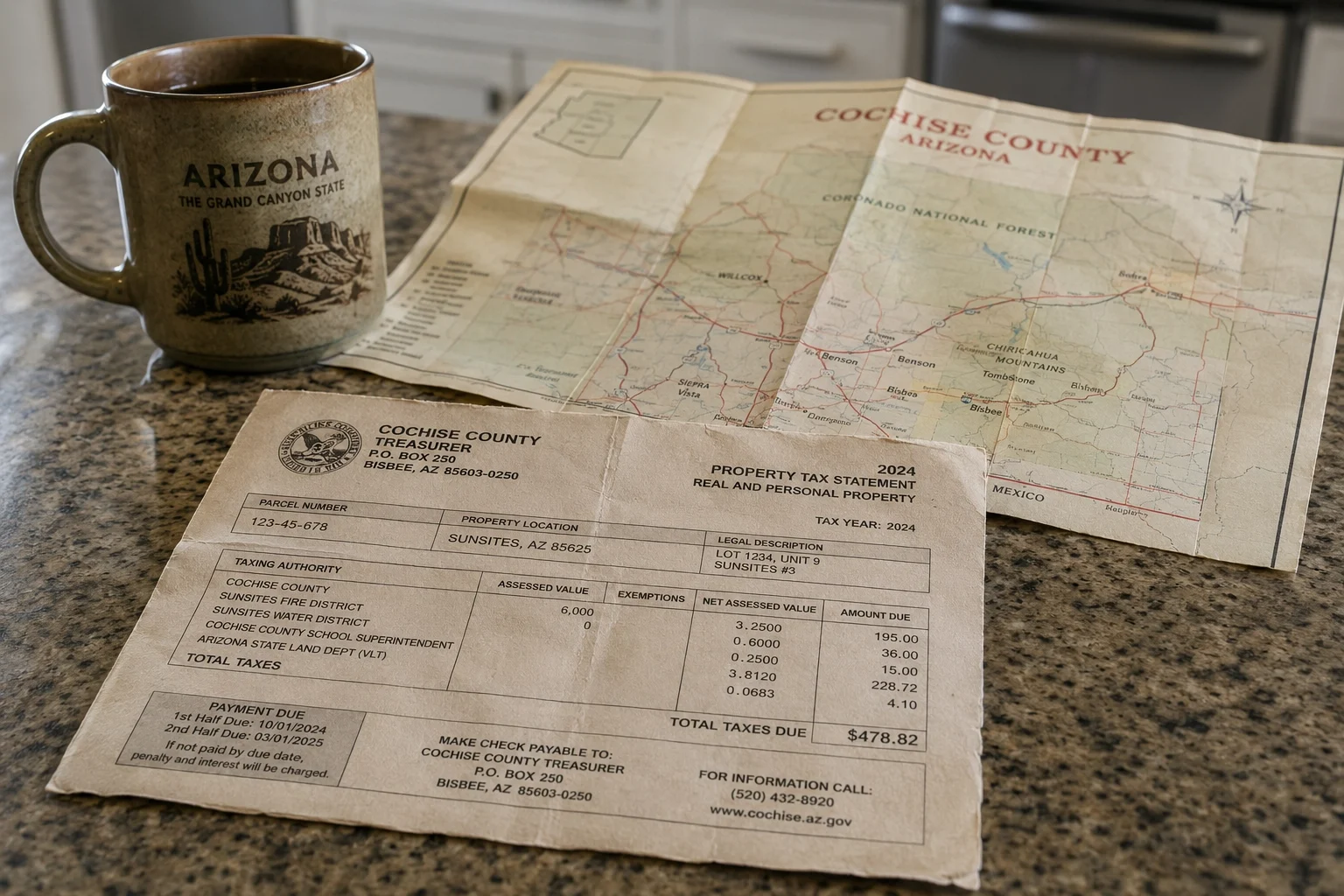
Arizona vacant-land property tax bills are typically modest in absolute terms. A 2.5-acre Mohave County off-grid parcel might carry an annual tax bill of $40 to $120. A 5-acre Cochise County parcel might carry $200 to $400. A 10-acre parcel in either county might carry $300 to $600 annually. These are not financially crushing numbers — which is why so many Arizona absentee owners simply hold the parcel indefinitely. The annual bill arrives, the owner pays it, and the holding continues.
But the math compounds over decades. A 1976 buyer who paid $200 in annual property tax (in inflated 1976 dollars) and continued paying as the bill rose to $300, $400, $500 over the following five decades has now paid roughly $15,000 to $20,000 in cumulative property tax — often substantially more than the parcel is currently worth. Arizona’s tax-lien sale calendar under ARS Title 42 Chapter 18 means that if the owner ever stops paying, the county treasurer holds a tax-lien sale in February of the following year (ARS § 42-18112), the certificate holder can foreclose the right to redeem after three years under ARS § 42-18201, and the parcel transfers via treasurer’s deed under ARS § 42-18205. The compounding-cost reality and the tax-lien-sale endpoint are why so many long-time Arizona owners eventually decide to sell — typically to an heir of the original buyer who has just realised they will inherit the same indefinite holding their parent had.
Why Arizona’s Adverse Possession Statutes Matter More Than Owners Realise
Arizona has the shortest adverse possession statute in the United States. Under Arizona Revised Statutes § 12-523, a person who occupies real property by “right of possession only” — without a written claim of right or color of title — can perfect title through a court action after just two years of continuous open and notorious possession. Under ARS § 12-526, the period is five years where the occupier holds a color of title and has paid the property taxes. The longer ten-year statute applies to certain other categories of vacant-land claim. The framework is set out in ARS Title 12, Article 2, sections 12-521 through 12-527.
That two-year statute under § 12-523 is one-fifth the statutory period of Texas’s ten-year adverse possession statute and one-third of Connecticut’s seven-year statute. Most absentee Arizona landowners — particularly inheriting heirs who have never visited the parcel — do not know this. A neighbour, an adjacent rancher, or a long-term off-grid occupier who has been using a portion of the parcel openly for over two years without the owner’s permission may already have a colorable adverse possession claim. The exposure is real and rarely discussed in casual conversation about Arizona land. Selling the parcel now — converting the uncertain holding into a definite dollar amount — is the procedural answer that resolves the exposure before it can mature into someone else’s title claim.
The Real Cost of Listing Remote Arizona Land With an Agent
Listing a remote Arizona vacant parcel through a traditional real estate agent is structurally difficult. Most Arizona real estate agents focus on Phoenix, Tucson, Flagstaff, and the Sedona-Prescott corridor — the urban and suburban markets where transaction volume supports a residential-style practice. The kind of one-to-ten-acre Cochise or Mohave County off-grid parcel that requires a four-wheel-drive trip to inspect and a multi-state buyer marketing effort is outside that normal practice. The few Arizona land specialists who do this work typically charge 10 to 15 percent commission — meaningfully higher than the residential standard — because the work involved is meaningfully more difficult.
On an $8,000 Cochise County off-grid parcel, a 12 percent commission consumes $960. Add 12 to 24 months of carrying costs at $200 to $400 per year in property tax. Add the listing-marketing costs that vacant-land agents typically recover from the seller, plus the buyer-side appraisal contingency that arrives if any institutional buyer surfaces (most cash buyers do not finance). The total cost of the traditional listing route on a low-value Arizona parcel routinely consumes 30 to 50 percent of the parcel’s value before the seller sees a dollar — a substantially higher percentage than higher-value markets like Texas or Florida, where the absolute commission and carrying costs are larger but the percentage relative to parcel value is lower.
What a Cash Sale With Sell Land Actually Looks Like — Arizona Edition
Three steps. Same-day cash deposit on offer acceptance. Direct buyer — Sell Land is not a wholesaler, and we close with our own funds. Twenty years of land-specific experience across all fifty states, including hundreds of Arizona vacant-land closings in Cochise, Mohave, Yavapai, Coconino, Apache, Navajo, La Paz, and every other Arizona county.
- Step 1 — You send us your property details. Use the quick form below, or call Bob or Carly directly at (314) 639-9800. We will ask the basics — county, approximate acreage, parcel identification number if you have it (most Arizona owners do because the annual tax bill includes it), and how you came to own the parcel (inherited, purchased, gifted). Five minutes. We do not need photographs of the parcel, a current survey, or a site inspection from you to make an offer. We do our own diligence after.
- Step 2 — We send you a written cash offer within 24 hours. A real number, in writing, with no contingencies on financing or buyer-side inspection. The offer specifies the closing date range and explicitly identifies Sell Land as the end buyer — not a wholesaler tying up the parcel hoping to assign the contract to someone else. The moment you accept the offer, we deliver a same-day cash deposit through the Arizona title company. That deposit is your evidence that we are the buyer the contract says we are.
- Step 3 — We close in 2 to 4 weeks, fully remote if you are out of state. Arizona permits remote online notarisation under ARS § 41-371 et seq., which means the closing documents can be notarised by an Arizona-licensed online notary regardless of where you are. Most out-of-state sellers complete the entire transaction without travelling to Arizona — contract signed electronically, deed notarised remotely, proceeds wired to your account at closing. We pay all the closing costs. The number on the written offer is the number that funds to your account.
Read More About Your Specific Arizona Situation
Arizona vacant-land sellers fall into three common patterns. We have written a dedicated guide for each one. Pick the one that matches your situation.
→ Sell off-grid land in Cochise or Mohave County — the absentee-owner adverse-possession risk under ARS § 12-523. For owners of remote Arizona acreage facing the two-year adverse possession statute exposure.
→ Sell a vacant lot in Sun City, Lake Havasu, or other Arizona subdivision community. For owners of platted lots in Arizona’s master-planned subdivisions — Sun City, Lake Havasu City, Anthem, Saddlebrooke, and similar communities.
→ How out-of-state heirs sell inherited Arizona land remotely under ARS Title 14 and § 41-371. For heirs handling Arizona estate administration from out of state — with informal probate under ARS § 14-3301 and remote online notarisation making the entire process possible without flying to Arizona.
Ready to See a Real Number on Your Arizona Land?
One written offer. Same-day cash deposit when you accept. Twenty years of land-specific experience. Direct buyer — closing with our own funds, not searching for someone to assign the contract to. Whether the parcel is 2.5 acres of Mohave County desert your father bought in 1976, 5 acres of Cochise County land you bought in 2007 expecting a retirement build, or 10 acres an uncle deeded to you a decade ago and you have never visited, the offer process is the same. We make it simple.
Contact Us Now And Get Your Free, Fair All-Cash Offer Today.