
You inherited a Florida lot you have never seen. The annual Lee County tax bill keeps arriving.
Maybe it is a quarter-acre lot in northwest Cape Coral that your grandfather bought from Gulf American Land Corporation in 1965 on a $20-down installment plan. Maybe it is a half-acre in Lehigh Acres your father picked up at a 1990s land bank. Maybe it is two parcels in North Port from the General Development Corporation era, or a Port Charlotte lot from the same Charlotte County development surge. Whatever it is, you almost certainly do not live in Florida — and the annual property tax bill, the canal assessment, the HOA-style fees keep arriving at your out-of-state address on land you have not visited and may never visit.
This guide is for you. It explains what the Florida vacant-land market actually looks like in 2026 — including the 2.1 million subdivision lots that exist across the state because of the 1957-1969 Florida land-sales boom — what the property tax math is on a typical Cape Coral or Lehigh Acres lot, why the traditional listing route through a real estate agent typically costs more than vacant-land sellers expect, and what working with Sell Land (Bob and Carly Scott, in business twenty years, buying vacant land in all sixty-seven Florida counties) actually looks like from the seller’s side of the table.
What the Florida Vacant Land Market Actually Looks Like in 2026
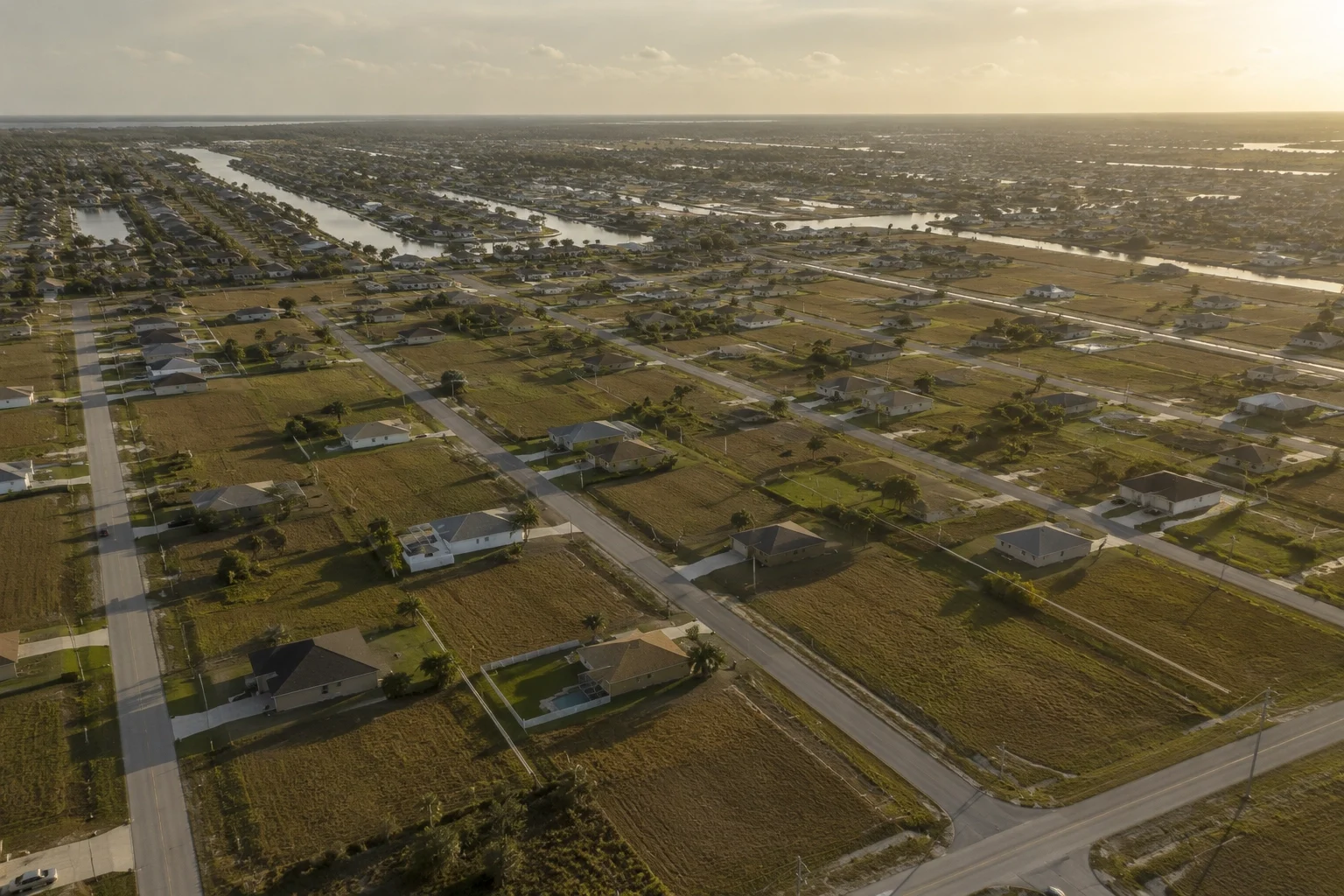
Florida has more vacant subdivision lots than any other state in the country — over 2.1 million platted lots extending across 1.6 million acres. Most of that inventory was created during a 12-year window between roughly 1957 and 1969, when a handful of Florida land development companies (Gulf American Land Corporation, Deltona Corporation, General Development Corporation, Mackle Brothers, Lehigh Corporation) carved up enormous tracts of central and southwest Florida into quarter-acre and half-acre lots and sold them on installment plans to buyers across the United States. More Florida land was subdivided into lots during the 1960s than in the rest of the United States combined.
Most of those original lots are still vacant six decades later. Lee County alone has over 337,000 platted lots, 232,000 of which remain vacant — most clustered within Cape Coral (founded by Gulf American Land Corporation in 1957, incorporated as a city in 1970) and Lehigh Acres (135,000 lots subdivided, 121,500 still vacant today). Charlotte County is dominated by Port Charlotte’s 118,250 platted lots, of which 88,500 remain vacant. North Port, Palm Coast, Citrus Springs, Deltona, Marco Island, and dozens of similar mid-century pre-platted communities continue to hold enormous vacant inventories. The structural reason there is so much Florida land for sale right now is that there has always been so much Florida land for sale — and most of the original owners (and their heirs) have been holding it for 60 years.
Real Experiences From Land Sellers Across United States

Jay Shultz

“Selling land is a different beast than selling a house. It was so refreshing to find out that Bob at Sell Land was super knowledgeable and had me covered in every way. He understands the nuances of buying land and also my unique needs. He is great to work with and if you have land you want to sell, Sell Land is the company and Bob is the man“

David M.
“Bob is a young man with a vision and aptitude for recognizing opportunities. He implements a plan and creates a winning situation for his clients. Bob continues to touch people’s lives based on their objectives with real estate. If you are entering the market as a seller, I could not recommend anyone more qualified or dedicated than Bob Scott.”
The Florida Property Tax Math on Vacant Land
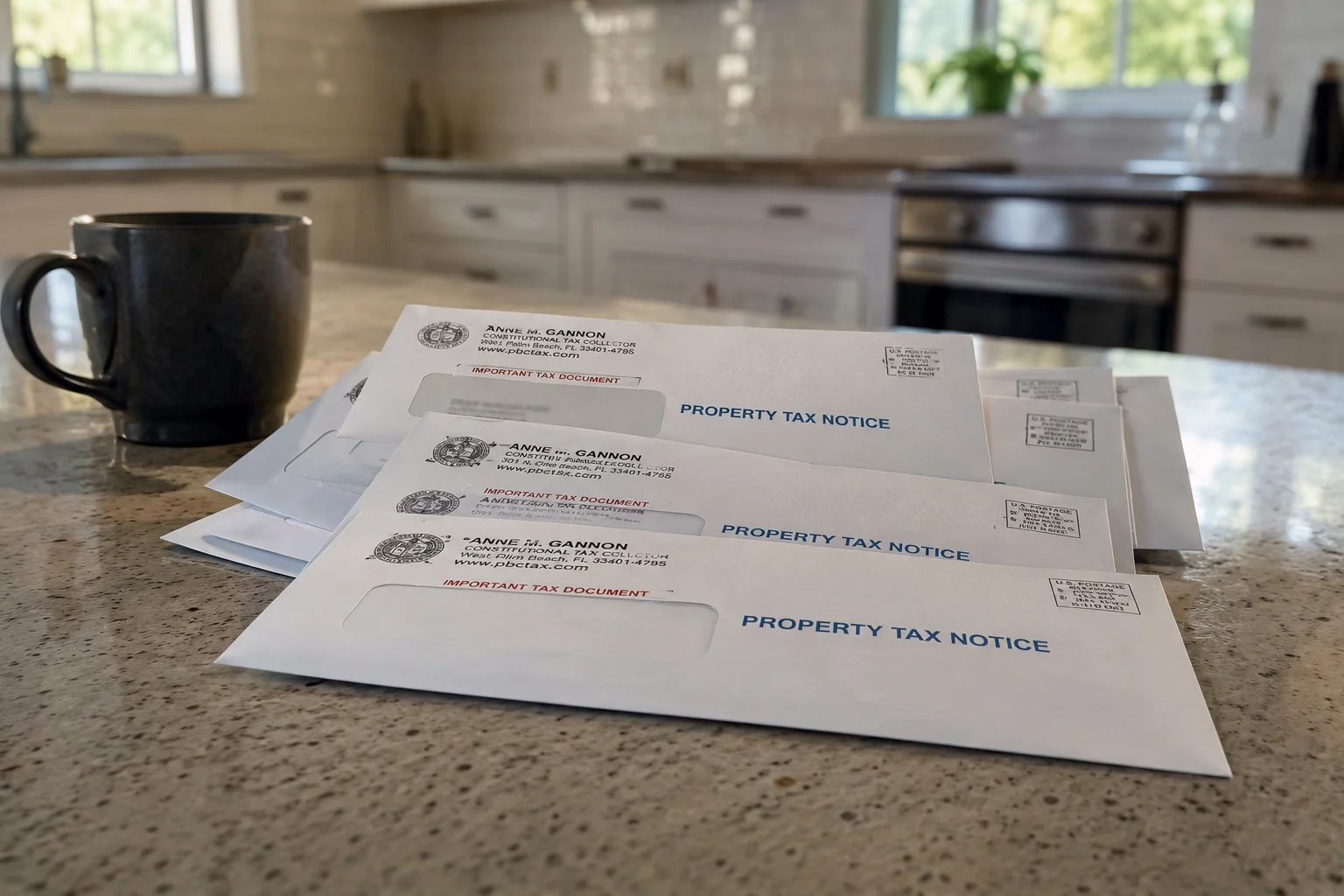
Florida does not levy a state income tax. Like Texas, it funds public services primarily through property tax administered at the county level. On a vacant Cape Coral or Lehigh Acres lot in 2026, the annual property tax bill typically runs $250 to $700 — modest in absolute terms compared to a Texas hill country parcel, but meaningful when the lot is producing no income and the owner has been paying the bill for years or decades. Add the canal maintenance assessments that many Cape Coral lots carry (often $150 to $300 annually), special-district fees for some Lehigh Acres parcels, and the carrying cost can run $400 to $1,000 per year on a lot worth $15,000 to $25,000.
Florida’s tax-collection calendar is the most aggressive in the country. Property taxes are due on November 1 of each year. If unpaid, the county sells a tax certificate on the property in May or June of the following year — a third-party investor pays the county the back tax plus interest in exchange for the right to collect that debt from the owner. Under Florida Statutes Chapter 197, specifically § 197.502, the holder of that tax certificate can file a tax deed application two years after April 1 of the year the certificate was issued — at which point the property goes to a tax deed auction. Florida owners who fall behind on property tax have a defined timeline before the tax deed sale takes the property, and that timeline is shorter than most owners expect.
The Real Cost of Listing Vacant Florida Land With an Agent
On a typical $20,000 Cape Coral or Lehigh Acres vacant lot, the traditional listing route is structured against the seller in a way that is easy to miss. Vacant-land agents in Florida typically charge 8 to 10 percent commission — meaningfully higher than the residential standard — because the work involved (boundary research, access verification, wetland and floodplain due diligence, buyer marketing across multiple states since most lot buyers are out-of-state) demands the higher rate. On a $20,000 lot, that is $1,600 to $2,000 in commission.
Add seller-paid closing costs of $400 to $800, the survey or boundary verification that the buyer’s title insurance underwriting often requires ($500 to $1,500), and 12 to 18 months of carrying costs at $400 to $1,000 per year in property tax and assessments while the listing sits. The total cost of the traditional listing route on a typical $20,000 Florida vacant lot routinely consumes $3,000 to $5,000 in total cost before the seller sees a dollar — between 15 and 25 percent of the parcel’s assessed value. On larger or more valuable Florida parcels (a five-acre commercial parcel near a growing corridor, or a buildable waterfront lot in Cape Coral), the absolute numbers grow but the percentages stay similar. The structure rewards the agent more than the seller, which is why a direct cash sale that closes in two to four weeks at a transparent number frequently nets the seller more cash than the listing route once all listing costs are honestly accounted for.
What a Cash Sale With Sell Land Actually Looks Like — Florida Edition
Three steps. Same-day cash deposit on offer acceptance. Direct buyer — Sell Land is not a wholesaler, and we close with our own funds. Twenty years of land-specific experience across all fifty states, with hundreds of Florida vacant-land closings.
Step 1 — You send us your property details. Use the quick form below, or call Bob or Carly directly at (314) 639-9800. We will ask the basics — county (Lee, Charlotte, Sarasota, Flagler, Citrus, Volusia, or any of the other 67 Florida counties), approximate acreage, parcel identification number if you have it, and how you came to own the lot (inherited, purchased, gifted). Five minutes. We do not need photographs, surveys, or the original 1965 Gulf American installment-sales paperwork to make an offer. We do our own diligence after.
Step 2 — We send you a written cash offer within 24 hours. A real number, in writing, with no contingencies on financing or buyer-side inspection. The offer specifies the closing date range and explicitly identifies Sell Land as the end buyer — not a wholesaler tying up the lot hoping to assign the contract to someone else. The moment you accept the offer, we deliver a same-day cash deposit through the Florida title company. That deposit is your evidence that we are the buyer the contract says we are.
Step 3 — We close in 2 to 4 weeks, fully remote if you are out of state. Florida permits remote online notarisation under Florida Statutes § 117.201 et seq., which means the closing documents can be notarised by a Florida-licensed online notary regardless of where you are. Most out-of-state sellers complete the entire transaction without travelling to Florida — contract signed electronically, deed notarised remotely, proceeds wired to your account at closing. We pay all the closing costs. The number on the written offer is the number that funds to your account.
Read More About Your Specific Florida Situation
Florida vacant land sellers fall into three common patterns. We have written a dedicated guide for each one. Pick the one that matches your situation.
→ Sell your vacant lot in Cape Coral, Lehigh Acres, or other 1960s Florida subdivision. For heirs and holders of the 2.1 million Florida subdivision lots created during the 1957-1969 land-sales boom — Gulf American Land Corp, Deltona Corporation, and the rest of the mid-century inventory.
→ Selling Florida land when you are behind on property taxes — the Chapter 197 timeline explained. For owners with a tax certificate already issued on the property who need to close before the certificate holder files a tax deed application under Florida Statutes § 197.502.→ How out-of-state heirs sell inherited Florida land remotely. For heirs handling Florida estate administration from out of state under Florida Statutes Chapter 733 — with remote online notarisation under FL § 117.201 making the entire process possible without flying to Florida.
Ready to See a Real Number on Your Florida Land?
One written offer. Same-day cash deposit when you accept. Twenty years of land-specific experience. Direct buyer — closing with our own funds, not searching for someone to assign the contract to. Whether the lot is a quarter-acre in Cape Coral your grandfather bought in 1965, a half-acre in Lehigh Acres your father acquired in 1998, or a five-acre commercial parcel near a growing Florida corridor, the offer process is the same. We make it simple.
Contact Us Now And Get Your Free, Fair All-Cash Offer Today.